
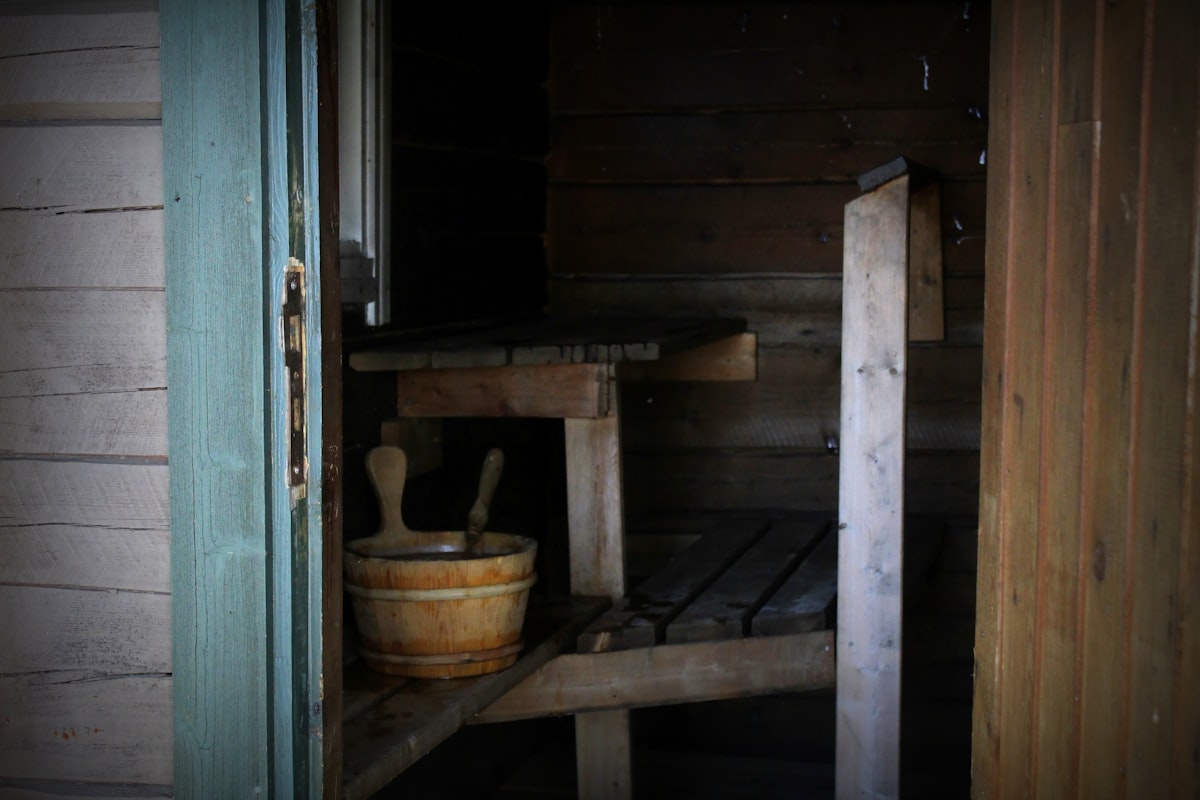
How Finns Actually Use a Sauna
Heating it, throwing löyly, sauna scents, the birch whisk, cooling off and the manners. A plain guide to how a Finnish sauna session usually goes.
There are about 3.2 million saunas in Finland, in a country of roughly 5.5 million people, and almost nine in ten Finns go at least once a week, according to the Finnish Heritage Agency. In 2020 UNESCO added Finland's sauna culture to its list of intangible cultural heritage. The listing covers more than the room itself: how a sauna is heated, how people behave in it, and the songs, beliefs and stories that go with it.
For a long time the sauna was the cleanest, warmest room on a Finnish farm. Until the middle of the last century many women gave birth in one, and the dead were washed there before burial.
A session usually goes like this.
Heating it
Give it time. An electric heater in a well-insulated sauna takes about an hour to get going, by Harvia's own figures, and longer in an outdoor sauna on a cold day. A wood stove needs tending the whole way. Go in once the room is properly hot and the stones are hot enough that water thrown on them turns to steam at once, not while it is still warming up.
If you are not sure which stones suit your heater, we wrote a separate guide to sauna rocks.
Löyly
Löyly is the steam you get when you throw water on the hot stones. A ladleful at a time is normal, so the air gets moister and the heat feels stronger without anyone being hit all at once. In a shared sauna it is polite to ask first: "Saako heittää löylyä?" means "May I throw some löyly?" Finns also talk about the löylynhenki, the spirit of the steam.
If you want a scent, buy a sauna scent made for the purpose and add it to the water in your bucket, in the amount on the bottle (usually a capful or two). A sauna scent is blended so that it mixes into water. Pure essential oil is not: it does not dissolve, so it floats on top of the bucket and then goes onto the stones in one lump. There it burns off as smoke, leaves a sticky film on the stones and can coat the heater's elements, which is a fire risk and can damage the heater. Harvia advises against putting anything in the heater water, essential oils and fragrances included, unless it is made for sauna use.
So never pour pure essential oil, or water with plain oil floating in it, onto the stones or the heater. If your heater's manual says anything about scents, follow the manual.
The birch whisk
A bundle of birch branches with the leaves still on is called a vihta in western Finland and a vasta in the east. You use it to gently slap or stroke your skin, and to move the hot air around. Fresh whisks are made in early summer, when the leaves are young and soft.
A dried or frozen whisk needs soaking first, in lukewarm water, not hot, for roughly 15 to 30 minutes depending on the maker. A fresh one needs very little. Most people let their skin warm up for a few minutes before they start.
Cooling off
Between rounds Finns step outside, take a cold shower, or cool off in a lake. In winter some roll in the snow or swim through a hole cut in the ice. Then they go back in for another round, as many as they like. A cold shower is plenty. If you have a heart condition or blood pressure problems, ask your doctor before going from a hot sauna into very cold water.
Manners
- Shower before you go in.
- Sit on a towel.
- Leave your phone outside.
- Keep your voice down. Quiet conversation and silence are both fine.
- Finns traditionally bathe without a swimsuit, with family or in same-sex groups. Nobody should pressure you, and public saunas have their own rules, so follow them.
Sauna and politics
Finland's president Urho Kekkonen, who held office from 1956 to 1982, is famous for taking visiting Soviet leaders to the sauna. Stories such as Khrushchev staying until five in the morning are told with a lot of colour, and sources disagree on the dates and details, so treat the specifics as legend. What is well documented is that the sauna became a normal place for Finnish politicians to talk. Foreign Policy covered the history in 2023.